5 Overlooked Steps to Finally Package Your Expertise
I know how to solve certain problems, but I don’t know how to turn that into an online business.
If you have said some version of that to yourself, you are not missing talent. You are missing a way to package your expertise into something someone else can use.
Most people in this position believe they need a brand new idea, thousands of followers, or weeks of fresh content before anyone will pay attention. None of that is true. What you already know, built up over decades in an office, a trade, a classroom, or simply a life that handed you a few hard lessons, is more raw material than most people realize. Most of it has never been put to use.
The problem is not that you have too little. It is that you have never been shown how to package your expertise into pieces someone else can use.
Think about the last time you solved a problem for a friend or a colleague without even thinking about it. You did not consult a course or a checklist. You just knew what to do, because you had done it before, more than once.
That is the real skill.
Why More Content Is Not the Answer
There is so much information out there right now that it is easy to end up doing nothing at all. Every week brings a new platform, a new tool, and someone telling you the old way is already finished.
That noise convinces a lot of people the fix is producing more: more posts, more videos, more everything. It rarely is.
I have gone down enough of these rabbit holes myself. An afternoon of research can easily leave you further from finished than when you started. Getting lost in the weeds with a dozen new tools feels productive right up until you notice you have nothing to show for it.
Someone might spend an entire weekend testing five new apps meant to organize their notes, only to end the weekend with the same notes, just scattered across five places instead of one. That is not progress. That is just movement.
It is easy to confuse busy with useful. The fix is usually smaller and slower than another shiny tool. It is taking the one thing you already know cold and finally packaging your expertise into a shape someone else can follow.
Step One: Write Down the One Thing You Already Know Cold
Start narrower than feels comfortable. Not “marketing,” not “retirement planning,” not “photography.” One specific problem you have solved more than once, for yourself or for someone else.
Maybe it is untangling a messy household budget. Maybe it is knowing exactly how to calm a nervous client before a big meeting. Maybe it is simply knowing how to keep a project moving after everything on it has gone sideways.
If nothing comes to mind immediately, ask what people already come to you for. That answer is usually the sentence you are looking for.
Write that down in one plain sentence. Not a business plan. One sentence.
That sentence is your starting material. It is also usually the first place people get stuck, because it feels too small to matter. It rarely is.
This is not about finding the most exciting thing you know. It is about finding the thing you have already proven works, even if proving it just meant one grateful person telling you it helped.
Step Two: Break It Into the Questions People Really Ask
One idea almost never stays one idea for long. Underneath it are smaller, more specific questions, the kind people type into a search bar or ask a friend over coffee.
Take your one sentence and list ten questions someone might reasonably ask about it. Not ten different topics. Ten angles on the same thing.
This is something I have come back to a few times in recent articles. It solves the exact problem most beginners run into: staring at a blank page, convinced they have already said everything they know.
Ten questions might feel like a stretch at first. Push past the first three or four obvious ones and the list gets more interesting, because that is where the specific, useful angles usually show up.
You have not. You have only said it once.
Step Three: Turn One Lesson Into Several Small Pieces
Here is where most people stop too soon. They write one article, publish one post, and treat the idea as used up.
A single lesson can usually become several things: a short story about how you learned it, a checklist someone can follow step by step, and a quick answer to one of your ten questions. Add a longer piece that ties the whole thing together, and you have four ways in.
Same idea. Four different doors for someone to walk through.
You are not repeating yourself. You are giving the same truth more than one entry point. That is what it means to package your expertise properly, instead of using it once and moving on.
Step Four: Build a Process You Can Run Again
In my corporate job, the systems that lasted were the ones designed to be repeated correctly, not the ones rushed together once under deadline pressure. Building something online rewards the same habit.
Once you have broken one idea into several pieces, write down exactly how you did it. What questions did you list first. What format did each answer become. What order did you put them in.
Picture a batch of custom water bottles for a youth team. The logo stays the same on every one, only the player’s name changes. That is the whole idea: build the template once, then let it carry different details each time you use it.
That short, unglamorous process is now something you can run again on the next thing you know cold. It works almost like mail-merging your own knowledge into whatever shape a reader needs next.
Design first, then build. It sounds obvious written down. Almost nobody does it in practice, which is exactly why it works for the people who do.
Step Five: Let Real Experience Do What AI Cannot
There is a lot of noise right now about using AI to produce more content, faster. Some of it is useful for organizing your own material.
Most of it misses the real problem. AI has not run a business. It has not sat across from a nervous client, missed a deadline, or figured out the hard way what really works with real customers.
Real experience carries weight that no summary can replace, because it comes with the mistakes nobody bothered writing down.
It can help you organize what you already know.
It cannot hand you experience you have not lived.
That is exactly why package your expertise is not really a phrase about content at all. It is a phrase about the one thing only you can offer, built from years nobody can hand you a shortcut through.
Start With the One Thing You Already Know
You do not need ten ideas to begin. You need one, broken into smaller pieces, built into a process you can repeat on whatever comes next.
A few hundred dollars a month from something built this way can matter more than people expect. It is not just about the income. It is about the confidence that comes from finally finishing something.
That is the whole system. Not more hours. Not more noise. Just a better way to use what is already sitting there, waiting to be packaged into something worth sharing.
That is the whole point.
If you have spent years solving problems nobody taught you to name, you already have something worth building on. Start small, write it down, and give yourself permission to build it one repeatable step at a time.
Keep building. Keep learning.
John
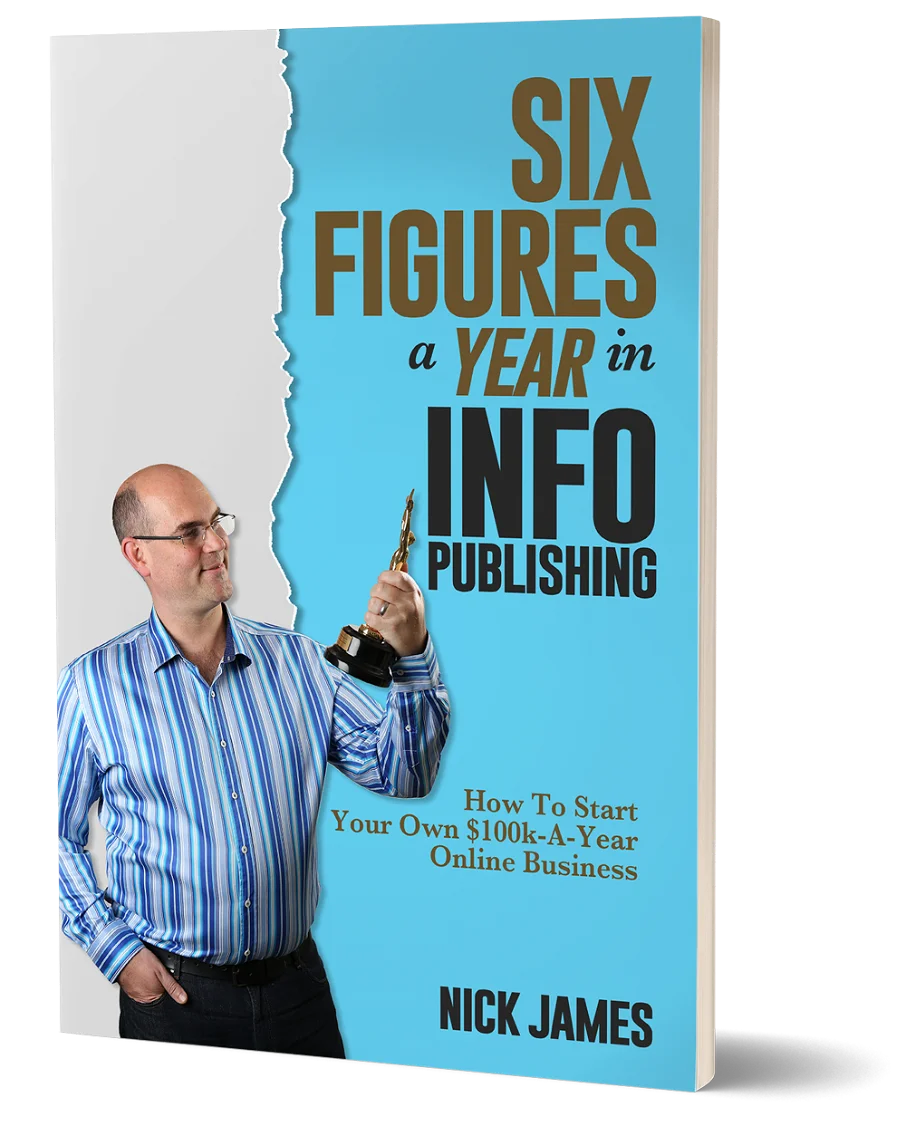
Author offers a FREE copy of this book to his next door neighbor... to prove he's not a drug dealer!
Now claim your FREE COPY.
and follow the step-by-step instructions for making the kind of money (and living the kind of lifestyle) that'll get your neighbors curtains twitching with curiosity!
Enter your details below to discover how to claim your FREE COPY of 'Six Figures A Year In Info Publishing' ...
Privacy Policy : We value your privacy. You can unsubscribe from receiving future emails with 1 click at any time.