The Surprising Reason Doubt Is the Wrong Reason to Quit
What if the online business idea making you nervous right now is exactly the kind of idea that works?
Here is a question worth sitting with for a minute. Would you have believed, in 1997, that a scrappy online bookstore could out-sell every major retailer in the country?
Would you have handed your credit card number to a stranger on a site built entirely around trust, believing a check in the mail would bring your item home?
Plenty of smart, experienced people looked at ideas like those and said no, that will never work.
That same voice shows up when you consider something new. ‘I don’t want to feel foolish or waste time,’ is a thought you have probably had yourself, and I know it well.
Doubt feels like good judgment.
It rarely is.
The People Who Were Sure It Would Fail
A major bookstore executive once said a scrappy online retailer selling books over the internet would not cut it in the long term. That retailer became one of the largest companies in the world.
A technology analyst in the early 2000s wondered openly whether a certain search engine’s business could ever catch up to its own technology. It managed just fine.
Even a well known software executive once laughed off a $500 phone, predicting it would never capture meaningful market share. That phone changed how most of us carry a computer in our pocket today.
And in the earliest days of online auctions, people asked a reasonable question. Who would be foolish enough to mail a check to a complete stranger on the internet and simply trust the item would show up? Millions of people, it turned out.
None of these doubters were foolish. They were simply measuring something new against everything they already knew, and the new thing did not fit the old measuring stick.
Why Doubt Feels Like Proof, But Is Not
Second-act readers carry a particular version of this doubt. Many of you spent decades being the expert in the room, the one with the steady paycheck and the confident answer.
Starting something new now, especially something as unfamiliar as an online business, can feel like walking backward into beginner status on purpose. That feeling is uncomfortable. It is not evidence.
The real fear usually is not technology, though technology plays its part. It lives closer to this thought: I don’t want my wife thinking I’m spending all this time and money for nothing.
You may know that fear completely yourself. That fear kept caution in place longer than it should have, and it is one of the most honest things readers have shared with me. You are not alone in feeling it.
But doubt is not a measurement of whether something will work. It is a measurement of how unfamiliar something feels. Those are two different things, and mixing them up has cost people years they did not need to lose.
You can read more about this kind of hesitation in other articles I have shared recently. It keeps resurfacing because it is the real obstacle, far more than any missing technical skill.
The Wood That Flew Off the Lathe
I learned this lesson the hard way, with a two inch by two inch block of wood, eight inches long, clamped onto a lathe spinning at about 800 rpm.
I had just finished the lecture part of a woodturning class, where the instructor said something that stuck with me: you cannot learn to ride a bike at a seminar. I nodded along.
Then I turned the lathe on. You can probably already guess what happened next.
I remembered everything about the three points of contact I had just been taught. I made a clean first cut. Then I moved the tool left to keep going, without backing it out first.
The wood flew off the lathe and landed about four feet away.
That moment looked exactly like failure. A beginner, a flying block of wood, a room full of people who had not made that particular mistake yet. You have probably had a moment exactly like that, where getting it wrong felt like proof you shouldn’t have tried.
It was not failure. It was the exact moment the lesson arrived. The instructor came over, guided my hands through the next cut, and what he had explained earlier suddenly made sense in a way no amount of listening could have managed on its own.
The wood flew off the lathe a couple more times before I got the hang of it. By the end of that day, that same block had become my first ice cream scoop, with a mahogany handle.
You will have your own version of that flying block of wood waiting on your own workbench.
An online business idea that looks shaky in its first weeks is not necessarily a bad idea. It is very often just a beginner, a new skill, and the ordinary mess that comes before the hang of it arrives.
The wood flying off the lathe was never proof the idea was wrong. It was proof that doing had replaced only thinking about it.
You already know which kind of fear you’re feeling, if you stop long enough to ask.
Nervous Is Not the Same as Wrong
It helps to separate two feelings that get lumped together far too often, especially when you’re weighing an online business idea: fear that is protecting you, and fear that is simply protecting your comfort.
A fear worth listening to sounds like this person is asking me to pay before I see anything real. It also sounds like nobody can explain how this works. Those are useful signals. Pay attention to them.
A fear that is only protecting your comfort sounds different. It sounds like I have never done this before, or what if I get it wrong in front of someone. Those feelings are real, but they are not information about whether the idea works.
Robert, as I think of him, is experienced in his field and brand new to this one. That mismatch produces a very specific kind of discomfort. It is easy to mistake that discomfort for a warning sign, when it is really just the feeling of learning something new later in life.
What to Do With an Idea That Makes You Nervous
You do not need to feel confident before you start. Your online business idea needs you to find out what you do not yet know, the way I found out mine the moment that block of wood left the lathe.
Start smaller than feels necessary. Test one small piece of the idea rather than committing to the whole plan at once.
Talk to someone who has tried something similar, rather than someone who has only heard about it secondhand. The most useful guidance in this space tends to come from people who have been through the mess themselves.
Write down the specific thing you are afraid of, in plain words. Then ask whether it is protecting you from a real risk, or simply protecting you from feeling like a beginner again.
And remember that the people who doubted the biggest ideas in history were not foolish. They were judging something unfamiliar by the only measuring stick they had.
You get to use a better one. Now it’s your turn to use it on your own idea.
Your idea does not need everyone’s approval before it is allowed to work. It just needs you willing to turn the lathe on, make the first cut, and keep going even when something flies off.
Think and do, then do it better next time.
John
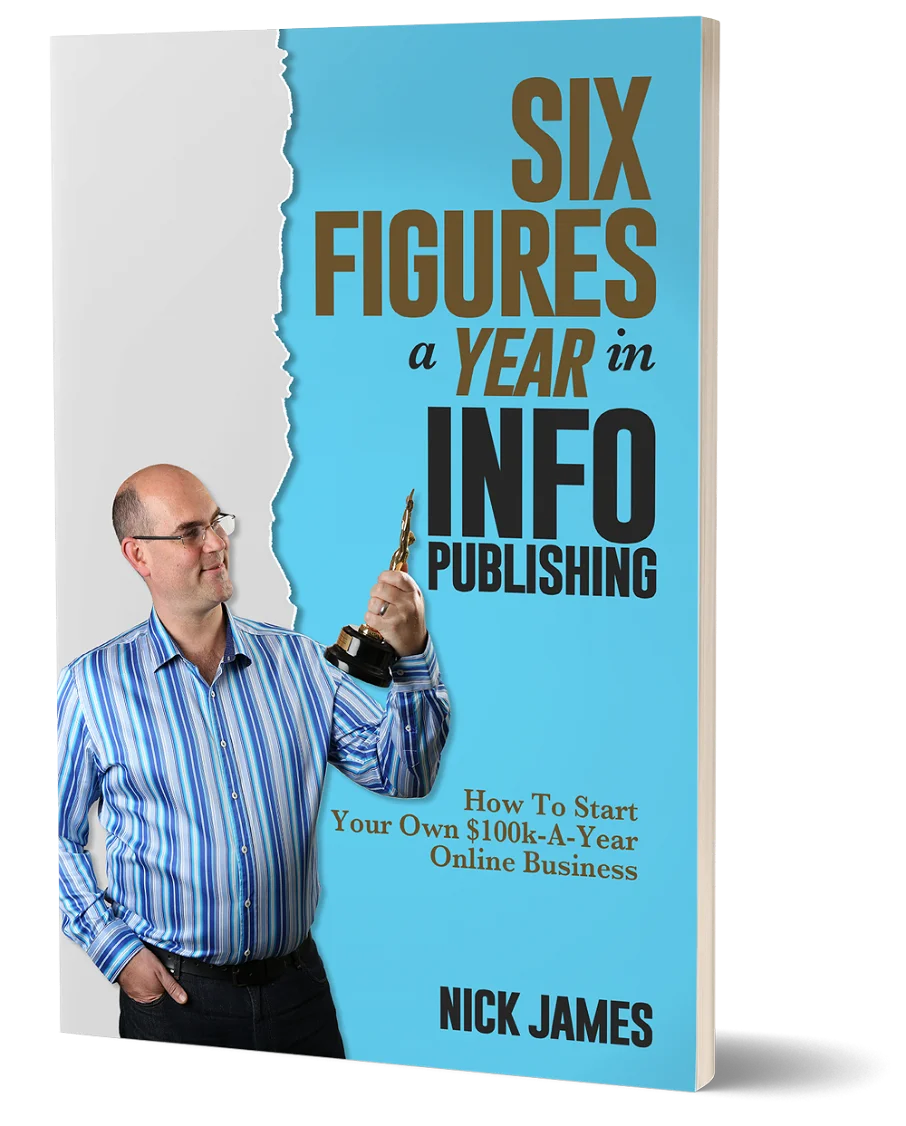
Author offers a FREE copy of this book to his next door neighbor... to prove he's not a drug dealer!
Now claim your FREE COPY.
and follow the step-by-step instructions for making the kind of money (and living the kind of lifestyle) that'll get your neighbors curtains twitching with curiosity!
Enter your details below to discover how to claim your FREE COPY of 'Six Figures A Year In Info Publishing' ...
Privacy Policy : We value your privacy. You can unsubscribe from receiving future emails with 1 click at any time.


