The Call-to-Action Mistake Killing Real Conversations
Years ago I joined a Facebook ads course that promised to teach me how to get attention online. Instead it taught what the instructors called interruption marketing: slap a jarring, Fiverr-made image on a post and stop the scroll. The problem was simple. Those images got student accounts banned, and the people running the program spent more time teaching workarounds than teaching an actual business. A few of us in a small accountability group started calling the leaders the kumquats, half joke, half warning sign. I kept the copywriting lessons. I left the rest behind.
Every time you see a business post end with “Comment below!”, it’s the kumquats all over again, the same shortcut dressed up differently.
If you are trying to build real conversations online, whether that is a Facebook group, an email list, or a handful of comments under your own posts, the fix starts in one place. It is not a flashier tactic. It is a better question. That one shift matters more than most people realize, and it costs nothing to try.
The Habit Hiding in Plain Sight
“What do you think? Comment below!” is not wrong exactly. It is just easy to ignore.
Nobody stops scrolling because you asked them to engage. People stop scrolling because something made them want to say something back.
That is the gap most of us never notice. We treat the call to action as a formality tacked onto the end of a post. It’s the online equivalent of clearing your throat before you say something important. But a weak call to action at the end of good content undercuts the whole piece. It’s like spending an hour writing something useful, then mumbling the last line.
It is worth saying plainly: a vague call to action is not a small mistake. It occupies exactly the spot where the heaviest lifting needs to happen.
Why a Specific Question Beats a Generic One
“Any thoughts?” asks for an essay. Most people, understandably, would rather scroll past than write one.
A specific, low-effort question asks for something a reader can answer in five seconds, without composing anything that feels like homework.
- “Which would you choose: A or B?”
- “Finish this sentence: I knew I was officially running a business when blank.”
- “What is the best small purchase you have ever made for your business?”
Notice what each one has in common. They let someone talk about their own experience, opinion, or small victory, instead of requiring expertise they may not feel they have. That matters especially for anyone later in their career wondering whether they even belong in this space. A question about their own experience is one they can answer with confidence. A question that sounds like a quiz is one they will quietly avoid.
This is the same principle I had to relearn with my own audience, the people I think of as Second-Act Robert. He knows a great deal professionally but still feels new to all of this. Ask them something that requires an expert answer and they will say nothing at all. Ask them to share what they already know, and suddenly they have plenty to say.
A generic call to action is not a small mistake. It is the part of the post doing the least work, sitting right where the most work needs to happen.
Make It a Conversation, Not a Broadcast
Here is the part people skip. Posting the question is only half of building real conversations.
If someone answers and you never reply, you have confirmed exactly what they suspected: that the question was never really about them.
Reply to the first few comments. Ask a short follow-up. If somebody says, “Email has worked best for me,” ask why. That single follow-up question often produces a better exchange than the original post did.
This is how I think about my CRM and email system: the questions you ask your list aren’t there to generate numbers to show someone. They’re there because the answers tell you what to write next, what to fix, and what somebody really needs help with. I’ve written about this kind of system-building in other articles I’ve shared recently, and the pattern repeats everywhere: the asset is never the question itself. It is what the question opens up.
What This Has to Do With Trust
It’s worth admitting: for a long time, putting real effort into a post nobody responded to felt like wasted time. Worse, it felt like something my wife would reasonably raise an eyebrow at. A few quiet replies under a post, with nothing to show for the hours it took, can feel discouraging. It can feel like proof you are spending time and money for nothing.
What becomes clear is that the posts earning a real reply, even just one thoughtful one, were doing something a hundred likes never did. They were starting an actual relationship with one person. That person remembers you differently than someone who scrolled past a “Like if you agree” post without a second thought.
This is the part a “Tag 3 friends” call to action will never deliver, however many comments it collects. Those comments are the word “yes” typed forty seven times. They teach you nothing, and they build nothing. A genuine answer to a genuine question is a small, visible sign that someone trusts you. That is the entire point of building real conversations into an online business.
Where Those Conversations Should Eventually Lead
A good comment thread is not the finish line. It is the opening of a door. Somebody who answers your question, replies to your follow-up, and keeps showing up in your comments is telling you something. Through their own behavior, they are showing you they are paying attention.
That is exactly the moment to invite them somewhere you own outright, rather than leaving the relationship sitting inside a platform you do not control. That part of the business runs through eShowcase, where those small social conversations eventually turn into an email list worth keeping and talking to directly. eShowcase makes that handoff simple, but the principle matters regardless of which tool you use. I have written about this kind of system-building in other articles I have shared recently, and the pattern repeats everywhere.
Think of your comment section as the testing ground, and your email list as the place the real relationship lives.
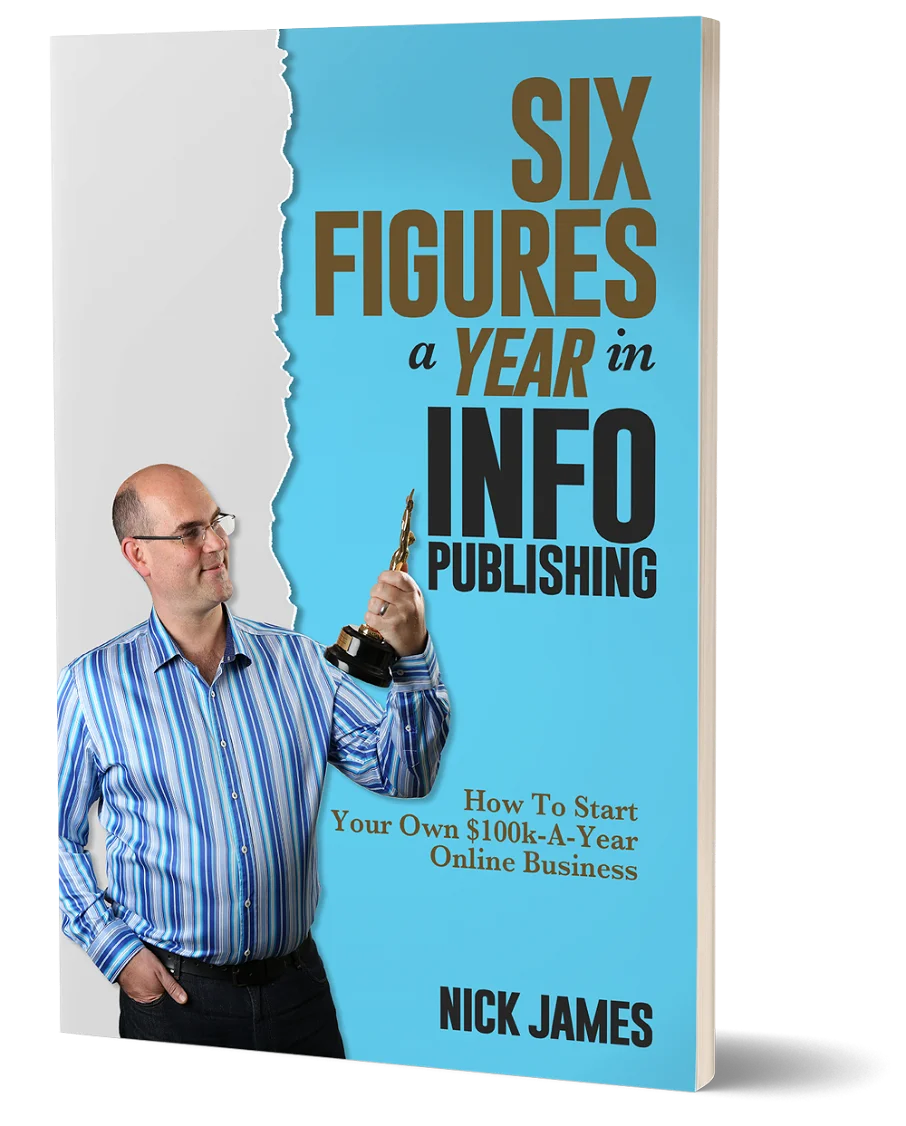
Author offers a FREE copy of this book to his next door neighbor... to prove he's not a drug dealer!
Now claim your FREE COPY.
and follow the step-by-step instructions for making the kind of money (and living the kind of lifestyle) that'll get your neighbors curtains twitching with curiosity!
Enter your details below to discover how to claim your FREE COPY of 'Six Figures A Year In Info Publishing' ...
Privacy Policy : We value your privacy. You can unsubscribe from receiving future emails with 1 click at any time.