How to Turn an Overlooked Skill Into Real Income
For years, the advice handed to anyone with real experience has been the same: take everything you know and turn it into one big course. Twelve modules. A logo. A launch date. Somewhere in that pile, you are supposed to feel like an expert.
Here is the part nobody mentions. Most people with a lifetime of real experience never finish that course, and the ones who do rarely sell it. The problem was never the knowledge. It was the size of the thing they thought they had to build, and it usually starts with one overlooked skill hiding in plain sight. That gap between knowing something and packaging it is where most good ideas quietly die.
I hear a version of this from readers all the time: “I know how to solve certain problems, but I don’t know how to turn that into an online business.” That is not a confidence problem. It is a packaging problem, and it has a smaller fix than most people expect.
You Do Not Need a Course. You Need One Overlooked Skill.
Somewhere in your working life, you got good at something specific. Reading a contract. Fixing a schedule. Handling an angry customer without making it worse. Nobody paid you for a broad category of knowledge. They paid you to be reliably good at one narrow thing.
That narrow thing is worth more than a giant course ever will be, because it is provable. A stranger can watch you do it, or see proof that you can, and decide whether to trust you within minutes.
Think about the last time you trusted someone you had never met. It probably was not because of a long biography or an impressive title. It was because they showed you one small thing, done well, and that was enough to make the rest of the decision easy.
A big course asks for a leap of faith. A single, provable skill asks for almost none.
Design First, Then Build
I picked this up somewhere completely unrelated to marketing. When I engrave logos onto water bottles for a youth sports team, the design stays the same for every bottle. But I mail-merge in each player’s name and number. Same process, different result, every time. I design the whole thing before I ever turn the laser on.
Most people trying to package what they know do it backward. They start building lessons before they have decided what the finished thing needs to prove. That is like starting the engraving before the design file is ready. You end up reworking everything halfway through.
An online business runs on the same rule as that water bottle. You design first, decide exactly what the finished thing needs to deliver, and only then start building it. Skip that step and you will spend months on material nobody asked for.
The same thing is true of a story, a garage cabinet, or a spreadsheet template. Whatever you are building, the finished shape needs to exist somewhere before the first piece gets cut, written, or coded. That order rarely feels natural to someone used to figuring things out as they go, but it saves far more time than it costs.
A big course asks for a leap of faith. A single, provable skill asks for almost none.
What “Small and Provable” Really Looks Like
Forget the word course for a minute. Ask a different question instead: what is the one thing you could prove you can do, in a way a stranger would trust?
That could be a short checklist with your name on it, built around the exact problem people ask you about most. A five-question diagnostic you walk someone through once, the same five questions every time. A worksheet that solves one specific, expensive problem your past career made you an expert in, laid out so clearly that anyone could follow it without you in the room.
Picture a retired project manager who spent thirty years keeping construction jobs on schedule. She does not need a course on project management. She needs one template that shows exactly how she catches a schedule slipping before it becomes a crisis, handed to someone who is drowning in exactly that problem right now.
It does not need twelve modules. It needs one clear standard, and something the person on the other end can point to afterward and say this worked for me.
I have written more on building things this way. Other pieces I have shared recently on packaging what you already know into something real go into that in more detail than I have room for here.
Why Small Beats Impressive
Second careers come with a strange kind of pressure. You spent decades being the person who knew the answer, and now the instinct is to prove it all at once. That instinct is exactly what stalls most people before they publish anything.
A narrow, provable thing does the opposite. It gets finished. It gets tested. It gets sold, or at least offered, while the giant course sits half-built in a folder somewhere.
It also changes how the work feels day to day. A giant course hangs over you as one long unfinished obligation. A single, provable thing gets crossed off a list, which is its own kind of relief after decades of measuring success in quarterly reports and performance reviews.
Being underused after decades of real expertise is a real feeling. I understand why the instinct is to go big to make up for it. But going small first is not settling. It is the only version of this that reaches a customer.
Where the Rest of It Lives
Once you have proven one small thing works, you have something worth building on. That is where the CRM and email side of my own business does the heavy lifting. I run my follow-up, my delivery, and my list entirely through eShowcase. So once someone raises a hand for that small proof of concept, the next step happens automatically, without me chasing it by hand. eShowcase also handles the social side of that follow-up, which I am still rolling out.
The tool does not decide what you are proving, and it will not write the checklist or the diagnostic for you. It just makes sure nobody who asks for it slips through the cracks while you are busy doing the actual work of proving your one small thing works.
Turning One Proof Into Something Bigger
Here is where the reliable, repeatable process matters again. Once your one small thing works, and people trust it enough to ask what else you have, that is your real proof of concept. Not a business plan. Not a launch. One thing that worked, repeated. That single piece of proof becomes the foundation for everything that follows, whether that is a second offer, a small membership, or eventually something bigger.
This is the exact gap my current mentor’s course was built to close, and it is why I still point people toward it. If you already have the one small thing figured out and want a structured way to build your own product around it, from licensing to packaging, Product Licensing Formula is worth a look. It goes further than what one article can cover.
Nobody builds a repeatable business by proving everything at once. They build it by proving one thing, then doing it better the next time. Start with the overlooked skill you already have. The rest can wait until you need it.
Whatever you choose to prove first, choose something small enough to finish this month, not this year.
Think and do, then do it better next time.
John
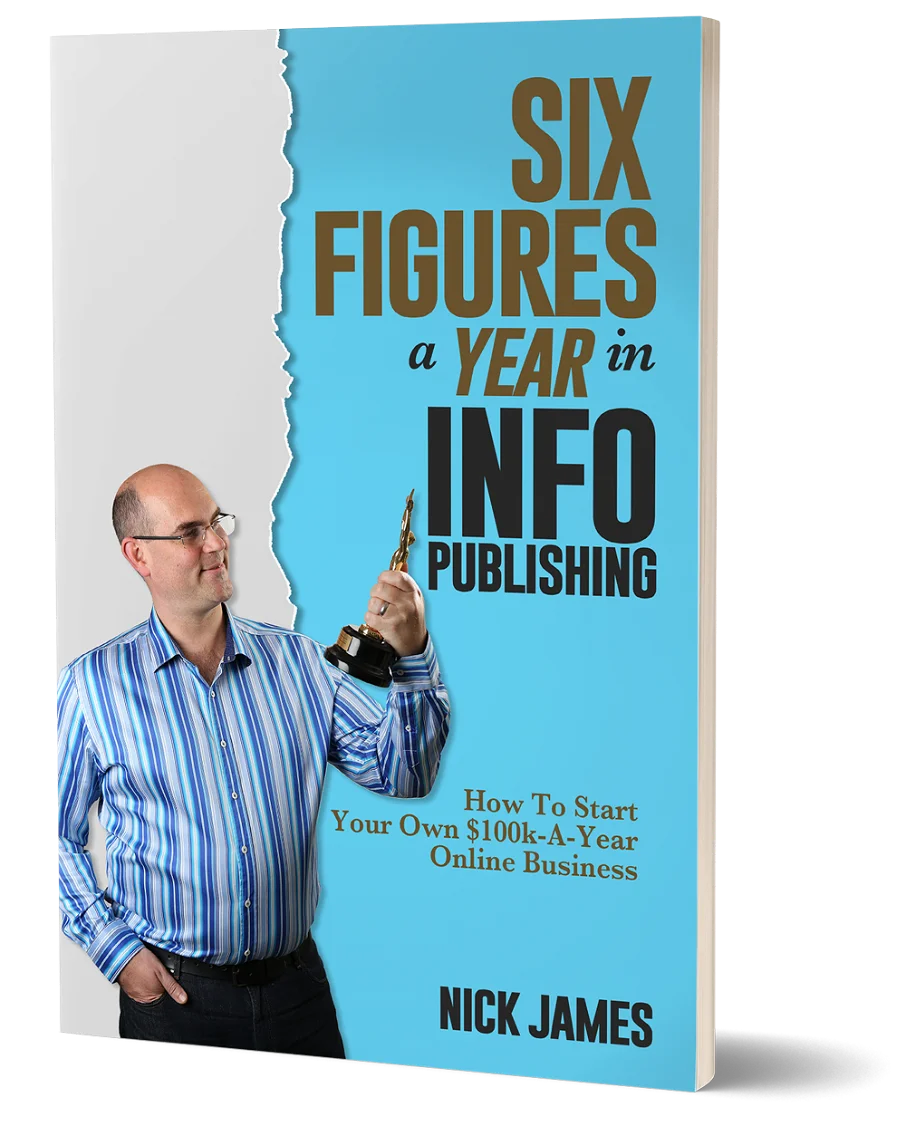
Author offers a FREE copy of this book to his next door neighbor... to prove he's not a drug dealer!
Now claim your FREE COPY.
and follow the step-by-step instructions for making the kind of money (and living the kind of lifestyle) that'll get your neighbors curtains twitching with curiosity!
Enter your details below to discover how to claim your FREE COPY of 'Six Figures A Year In Info Publishing' ...
Privacy Policy : We value your privacy. You can unsubscribe from receiving future emails with 1 click at any time.