The Counterintuitive Link Between Fewer Options And More Confidence
The common advice for anyone starting something new later in life is to research everything first. Compare every course. Read every review. Watch every free webinar before you commit to one.
I used to believe that too. More information felt like more safety.
Then I watched enough people, myself included at different points, prove the opposite. “There’s so much information out there that I end up doing nothing.” That line gets said in some form by nearly everyone trying to build something new later in their working life, and it is not an exaggeration. It is exactly what happens.
More options do not build confidence. They quietly erode it, one open tab at a time.
If you are standing in front of too many choices right now, wondering which course, which coach, which path is the real one, you don’t need more comparison. You need to find fewer options worth trusting in the first place.
Why More Choices Feel Safe and Rarely Are
There is a reason research feels productive even when it is not moving you forward. Reading one more comparison feels like action. It is not. It is a way to postpone the harder step, which is deciding.
Every extra option you line up adds one more decision. Which platform. Which pricing tier. Which coach’s version of the same basic idea. None of that friction shows up as a single dramatic moment. It shows up as a Tuesday night, tabs open, no closer to starting than you were a month ago.
I have spent most of my career in a corporate office, surrounded by people whose job was to weigh every option before recommending anything. The best ones did not present more choices. They narrowed the field and told you where to start. That habit turned out to matter just as much once I started building something online.
What Changed When I Stopped Comparing and Started Trusting
Early on, I went through a run of coaching programs, each one promising a slightly different angle on the same basic idea. I bought books, joined webinars, and kept a running list of who seemed credible. The list never got shorter. It got longer.
Eventually I found one mentor whose emails were plain and business-like, with no big claims attached to them. Before committing to anything, I bought his book, which was something I had not done with the others. What stood out wasn’t a single bold promise. It was a handful of case studies about regular people from very different backgrounds, all looking for the same thing I was.
That was enough to get me curious. It was not enough, on its own, to build real confidence. So I went further, the same way I would have evaluated a new control in my corporate work. I needed to see the thing tested, not just described.
I signed up for an out-of-town session, two and a half days, with about 20 other students in the room. The mentor, his partner, and one technical support person were there too. Going in, my biggest fear was the obvious one. The person on the training videos might not match the person standing in front of me.
He did. What I saw on screen is what I got in the room. That’s the question you can ask about anyone you’re considering trusting: does the person online match the person you’d meet in real life?
That is the part worth sitting with, because it is the actual mechanism behind building any kind of trust, online or otherwise. Consistency between how someone presents and how they show up when nobody is managing the camera matters. It is a far better test than one more comparison chart. I signed up for his bigger program that weekend. That decision is the reason I am still writing other articles I’ve shared recently about a business built on this same approach.
You don’t need a weekend retreat to run the same test. A few genuine interactions will tell you just as much.
It’s the same test anyone can run before trusting their own time or money to a stranger online. Watching someone remain consistent when it would be easier not to bother tells you more than any pitch ever will.
Confidence is not about having fewer problems. It is about having someone you trust enough to stop shopping around.
Fewer Options, Not No Options
None of this is an argument for skipping due diligence. It is an argument for stopping once you have found something truly worth trusting, instead of continuing to compare out of habit.
I think about this the same way I think about a repeatable process in my corporate work or in my laser engraving hobby. You do not redesign the template every single time. You build one that works, test it, and then run it, over and over, with small adjustments where they are truly needed.
The goal is not finding the perfect option among fifty. It is finding the right one among three or four, and then having the discipline to stop researching and start doing.
That matters even more if you are starting something later in life, with limited time and a healthy fear of wasting it. A few hundred dollars a month and a few focused hours a week will not survive being split across six different approaches. They might survive being put fully behind one.
Building Your Own Short List
If you are drowning in options right now, here is the practical version of everything above.
Pick three candidates, not thirty. Watch how each one behaves when nothing is being sold, in a free webinar, a support reply, a comment section. Notice whether the person matches the persona. Then choose, commit, and give it a real, honest run before you start comparing again.
That is where confidence truly comes from. Not from having examined every possible path, but from having tested one closely enough to trust it, and then having the discipline to follow it.
Fewer options is not a smaller ambition. It is usually the only way a bigger one gets built.
Wherever you are in that search right now, the next useful step probably is not another comparison. It is picking the one thing that has already earned your attention and giving it a real chance to prove itself.
Think and do, then do it better next time.
John
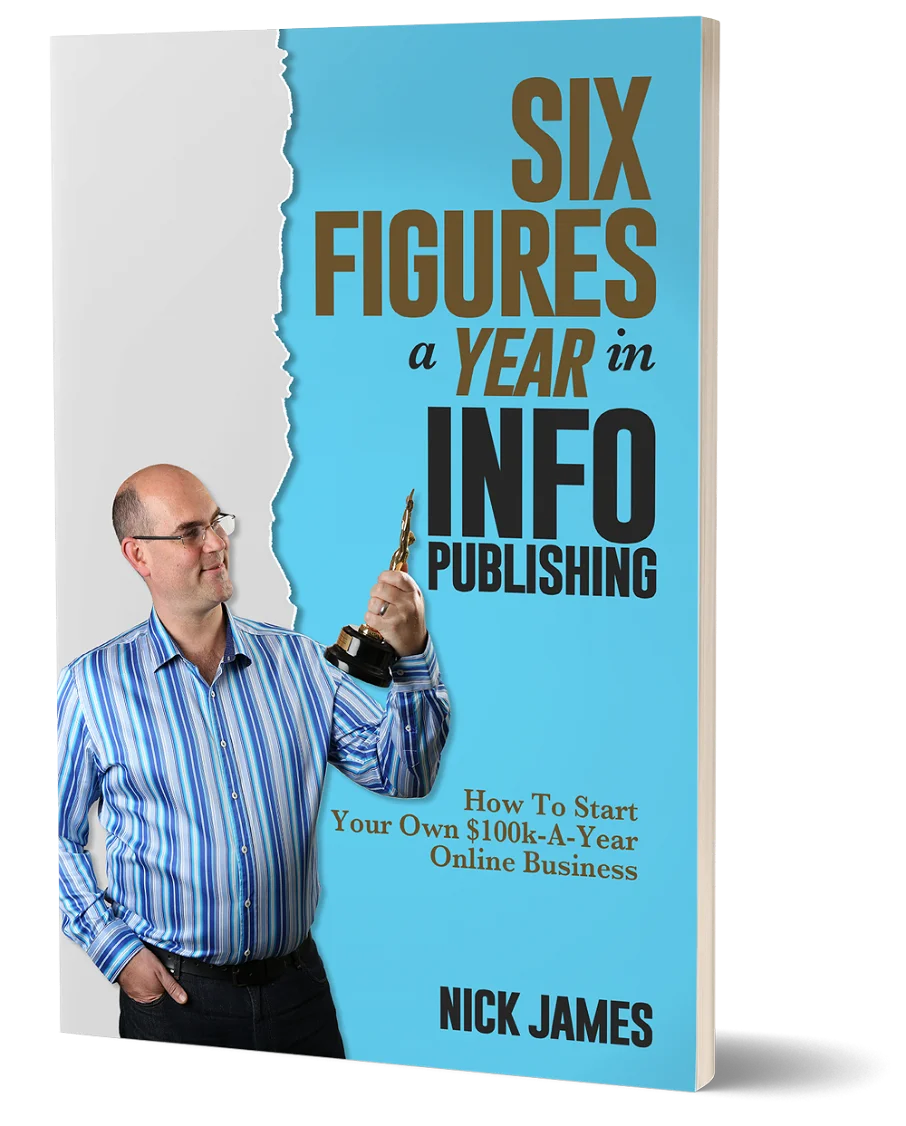
Author offers a FREE copy of this book to his next door neighbor... to prove he's not a drug dealer!
Now claim your FREE COPY.
and follow the step-by-step instructions for making the kind of money (and living the kind of lifestyle) that'll get your neighbors curtains twitching with curiosity!
Enter your details below to discover how to claim your FREE COPY of 'Six Figures A Year In Info Publishing' ...
Privacy Policy : We value your privacy. You can unsubscribe from receiving future emails with 1 click at any time.


