Would Your Online Persona Survive Meeting the Real You?
Years ago, before a weekend workshop with my mentor, one fear kept me up more than the flight did. What if the online persona I’d watched in his videos for months turned out to belong to a completely different person in the room?
You’ve probably felt that same doubt about someone before you trusted them with your time or money.
That gap showed up before, with other programs. The emails were plain and businesslike, and the videos were calm and confident. Then the support desk gave answers that sounded right but had nothing to do with the actual business.
That’s the exact worry behind a line I hear more than any other: I know there must be a way to earn something online, but I don’t know who to trust.
That workshop settled something worth still thinking about, and it has everything to do with the online persona you build, whether you’ve started building one yet or not.
What A Cartoon Owl Proved About Trust
Earlier this year, a language-learning app killed off its own mascot for two weeks. It brought him back only after millions of users hit a shared goal together.
It sounds like a stunt, and in a way it was. But the reason it worked wasn’t the shock. That mascot had a real personality long before he “died,” built out of the same running jokes and quirks, issue after issue, for years.
People weren’t reacting to a cartoon. They were reacting to something they felt they already knew. That’s the same way I felt I already knew the man on those training videos before I ever met him.
An online persona only works if it holds together, consistently, for long enough that people start to feel they know the real person behind it.
The Weekend That Tested My Own Online Persona
About 20 of us showed up to that two and a half day session, along with my mentor, his partner, and one technical support person.
My worry wasn’t about the material. It was whether the calm, plain-spoken person I’d watched for months would still sound like himself once the cameras were off. That’s the same test the cartoon owl had to pass, just at a much bigger scale. You’d probably feel that same doubt walking into a room like that yourself.
He did. He used the same tone answering a hard question from a stranger as he did answering an easy one from someone he already knew.
What I saw on the videos is what I got in the room.
That’s when I signed up for his bigger program, and it’s the same reason I’m still working with him today. The persona matched the person, and that match is worth more than any headline promise.
If you’re thinking about building any kind of online persona around your own experience, that’s the bar. Not how polished it looks. Whether it would survive someone actually meeting you.
Why Second-Act Robert Doesn’t Trust The Polish
Most of the people reading something like this aren’t 25 and chasing a viral moment. They’re more likely retired, semi-retired, or winding down a career they were good at, wondering if there’s a way to put that experience to use.
They’ve seen enough “big show” marketing to be wary of it. A few have said almost exactly this: there’s so much information out there that I end up doing nothing.
Think about someone who has already sat through a handful of confident presentations promising a shortcut, then spent a weekend unsure which step to take first. That pattern is exactly what this audience is done repeating.
A slick, over-produced online persona doesn’t solve that problem. It usually makes it worse, because it reads like one more thing to be suspicious of.
What actually earns trust with this audience is closer to what worked on me. Plain language. No big claims. The same person showing up in the newsletter, the videos, and the reply to a support question.
You’ll likely recognize a lot of that in yourself, even where the details differ.
A few other overlooked ways to build that kind of trust with a new audience show up in other articles I have shared recently. Take a look if you want to see how it plays out in different situations.
What Happens When The Persona Doesn’t Hold Up
I’ve been part of small groups over the years where people compared notes on different programs, and the same complaint kept coming up.
A confident persona out front, then a rushed product built on the fly whenever customers started complaining. That gap is what erodes trust fastest, more than any single bad review ever could.
Picture it happening in slow motion. A subscriber joins a list because the welcome email sounds like someone with real answers. Three months in, every reply reads like a template, and that same subscriber starts wondering if anyone is actually behind the account.
The persona promised one thing. The actual business, once you were inside it, turned out to be a different animal entirely. You don’t want to discover that gap only after you’ve already committed your time and money.
You don’t need AI, a bigger ad budget, or a better camera to avoid that gap. You need the discipline to only claim what your business, on an ordinary Tuesday, can actually back up.
Building An Online Persona You Don’t Have To Keep Up
Here’s the part that trips people up. They think an online persona means inventing a bigger, bolder version of themselves.
A short, plain sentence about what didn’t work last month says more than a polished highlight reel ever could.
It’s closer to the opposite. The safest online persona is just you, minus the parts you wouldn’t want to explain later.
You don’t need a script, a stage name, or an image that never shows a bad day. You need to sound like the same person in your third email as you did in your first.
That’s a system, not a personality trait, and it’s repeatable the same way any good process is. Decide what you actually believe, say it the same way each time, and let the small inconsistencies stay small instead of hiding them.
Where To Start If You’re Still Finding Your Voice
If you’re still working out what your own online persona should sound like, you don’t need to solve that before you start.
Nick James put together a free resource on packaging what you know into an information publishing business, called Six Figures A Year In Information Publishing. It walks through the early steps one at a time.
I haven’t built a product of my own yet. That’s still where I’m headed, which is exactly why people earlier in the process get pointed toward resources like this one.
On the technical side, keeping the same voice consistent across a list as it grows matters too. It’s part of what I use eShowcase for, once the emails start going out regularly.
Your online persona doesn’t need to be bigger than you are. It just needs to hold up the same way in a follow-up email as it did in the first one somebody read.
Start there, and the trust tends to follow on its own.
Think and do, then do it better next time.
John
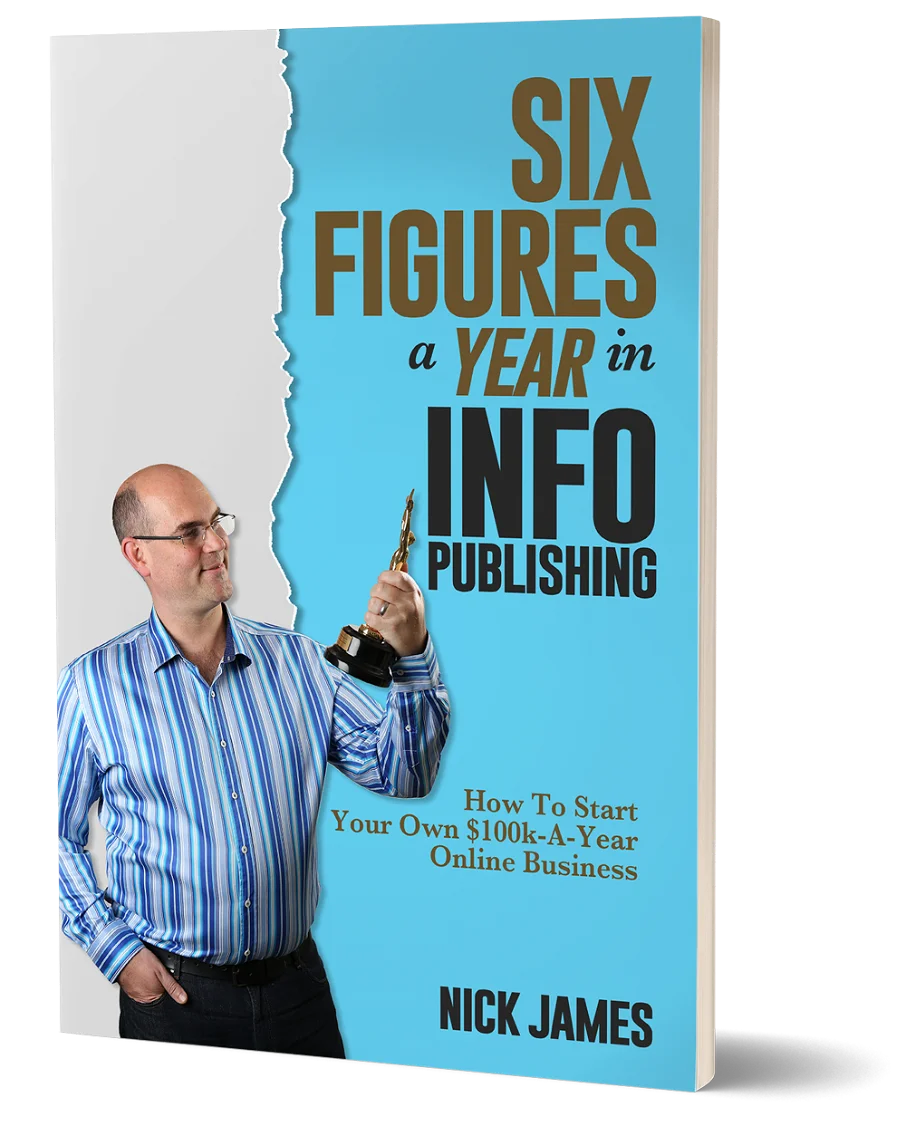
Author offers a FREE copy of this book to his next door neighbor... to prove he's not a drug dealer!
Now claim your FREE COPY.
and follow the step-by-step instructions for making the kind of money (and living the kind of lifestyle) that'll get your neighbors curtains twitching with curiosity!
Enter your details below to discover how to claim your FREE COPY of 'Six Figures A Year In Info Publishing' ...
Privacy Policy : We value your privacy. You can unsubscribe from receiving future emails with 1 click at any time.